
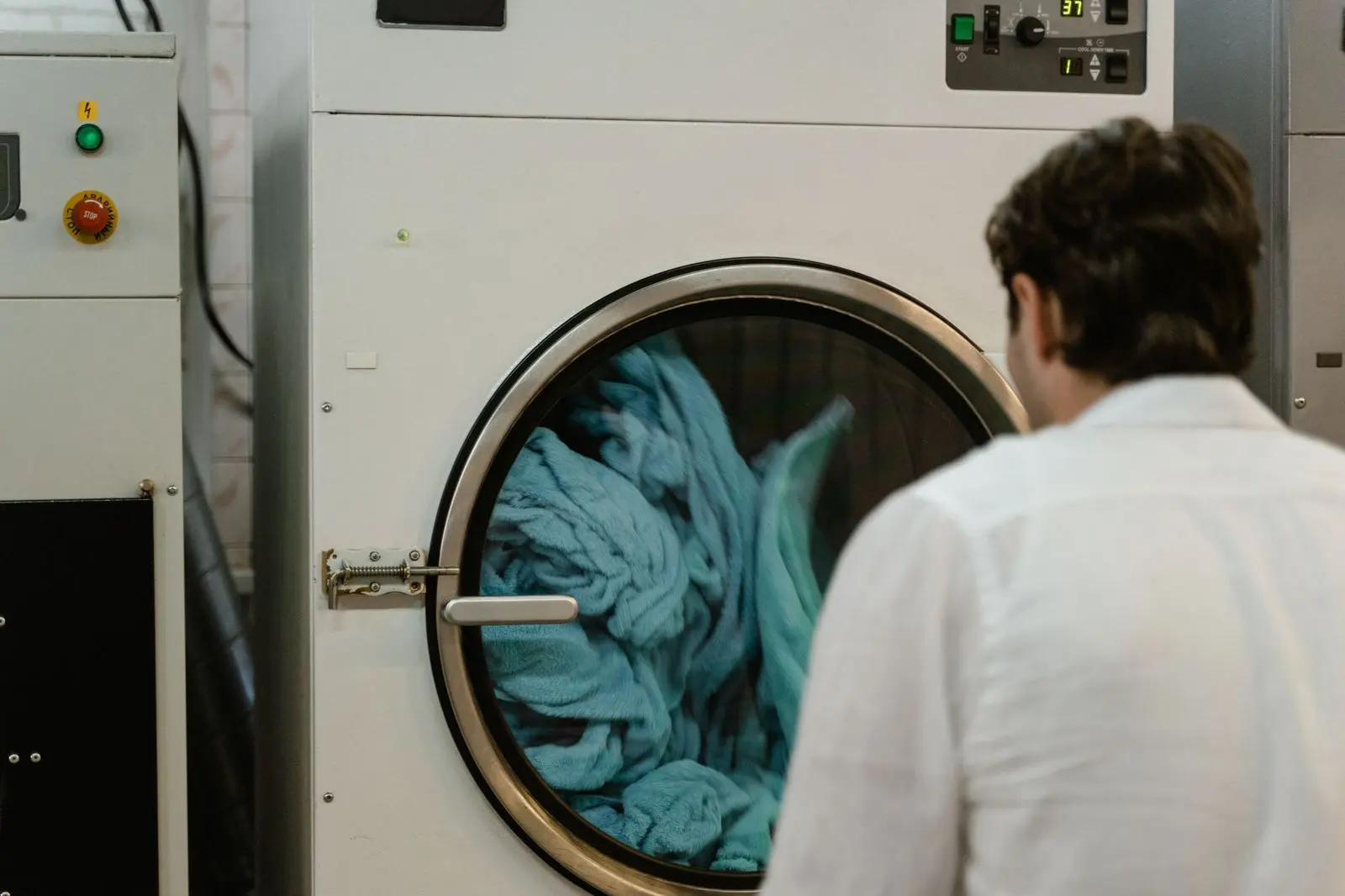
Standing in front of a wall of near-identical drums? Here is how to choose a washing machine: match the rated capacity to your loads, then compare the EU label’s energy, water, spin-drying and noise ratings.
This guide sits within the home improvement buying guide, which covers other major household purchases.
| Item | Value |
|---|---|
| Energy label scale | A (most efficient) to G (least efficient), as of 1 March 2021 |
| Energy consumption on the label | Shown for 100 cycles |
| Water consumption on the label | Litres, shown for 1 cycle |
| Average washing machine water use, 1995 | 84 litres per cycle |
| Estimated average water use, 2020 | 36 l/cycle |
| Spare-part availability period | 10 years |
These figures come from the European Commission’s product page for washing machines and washer-dryers. They can change, so check the source before you rely on them.
How the EU energy label works
The EU label for household washing machines and washer-dryers uses, as of 1 March 2021, a scale from A (most efficient) to G (least efficient), according to the European Commission. The rescaling was set up under Delegated Regulation (EU) 2019/2014, whose recitals call for an A to G rescaled label for these appliances.
The Commission’s product page says the label provides information on:
- the energy efficiency class,
- energy consumption for 100 cycles,
- water consumption for 1 cycle,
- duration for 1 cycle,
- noise emissions.
Read these as a set rather than hunting for one headline letter. A model with a strong class but a very long cycle or a loud spin may suit your home less well than a balanced one.
Capacity: how much laundry you need to wash
Rated capacity refers to the maximum mass in kilograms of dry laundry that can be treated in one complete washing cycle when loaded according to the supplier’s instructions, as the Commission’s label guide defines it. It is a ceiling, not a target.
Work through it in order:
- Note the load you wash most often, such as everyday clothes, towels or bedding.
- Look up the rated capacity on the label of each model you shortlist.
- Pick a drum that covers your usual load without cramming, and check the maker’s loading instructions for bulky items.
Very small machines sit outside the labelling rules. The regulation’s scope article excludes household washing machines with a rated capacity lower than 2 kg.
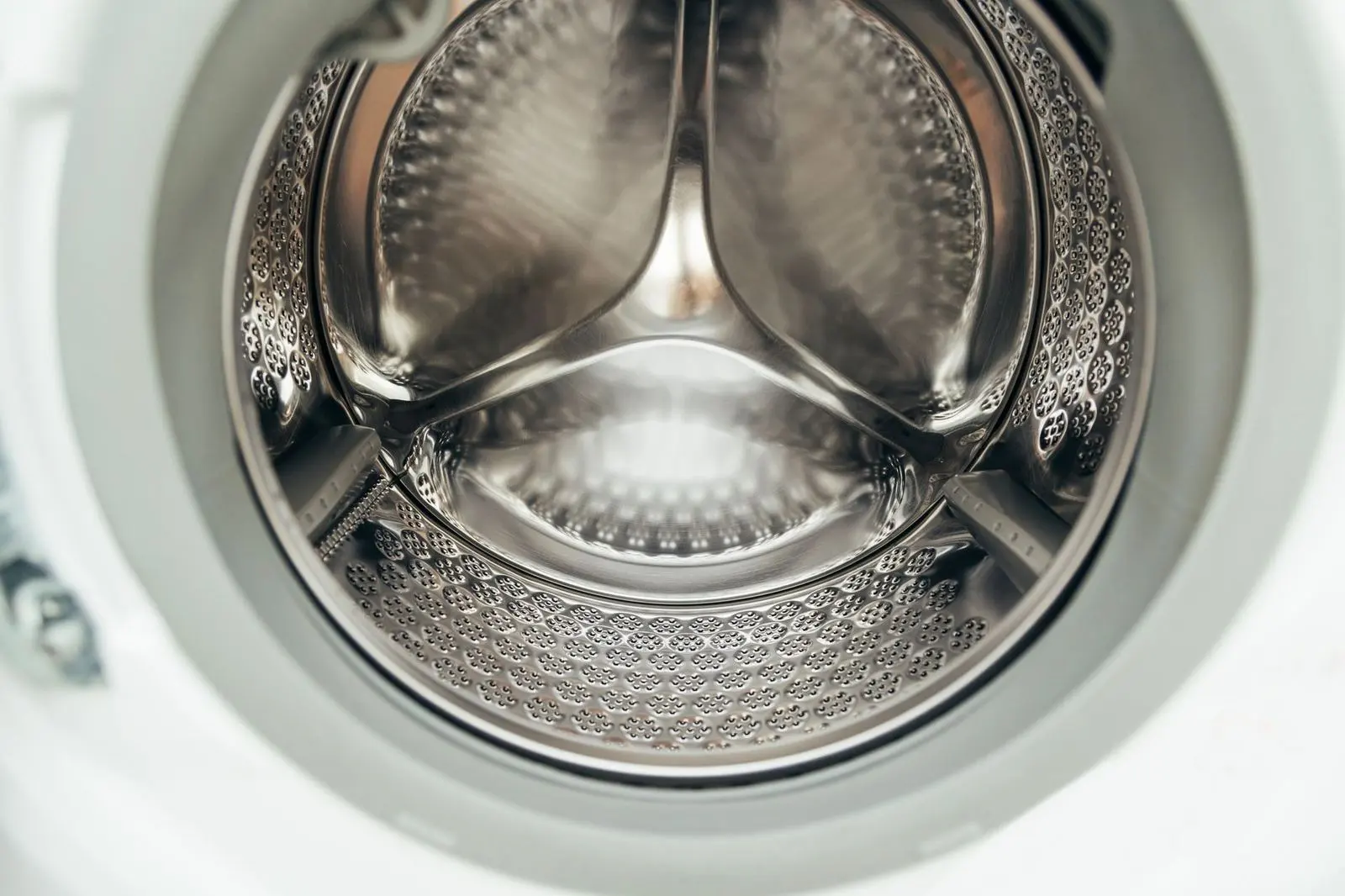
Energy and water use: what to compare
Machines in scope must have an ‘eco 40-60’ washing cycle, able to clean normally soiled cotton declared washable at 40°C or 60°C together in the same cycle, according to the Commission. Requirements for efficiency, function, duration and water use apply to that programme.
The same page notes that the label details are based on the ECO programme. That makes labels a fair basis for comparing models with each other, though your own wash settings will differ.
Water use has fallen sharply over time. In 1995 the average washing machine consumed 84 litres per cycle, and the Commission’s estimates put this at 36 l/cycle in 2020 and an expected 30 l/cycle by 2030, per the same page. Treat these as EU-wide estimates, not a promise for one model.
The Commission’s eco-tips, listed on its washer-dryer page, suggest a few habits that keep running costs down:
- Wash and dry full loads whenever possible.
- Use the right quantity of detergent.
- Select the eco 40-60 programme.
If you are replacing other appliances at the same time, the guide on how to choose a dishwasher covers that purchase.
Spin-drying class and noise
The Commission’s label guide describes the spin-drying efficiency class as a rating of how well the appliance removes water from clothes during the spin cycle. The regulation’s Annex IX lists it alongside the energy efficiency class and the airborne acoustical noise emission class as classes a supplier declares.
The noise class tells you how loud the machine is during the final spin of the Eco 40-60 wash program at full load, according to the Commission. If the machine will sit near a bedroom or an open-plan living area, give it extra weight.
Shoppers often compare spin speed in revolutions per minute as well. The sources used for this guide quote no such figures, so none are given here: use the spin-drying class as your comparable measure.
Spare parts and repairability
From 1 March 2021, ecodesign Regulation (EU) 2019/2023 repeals and replaces the earlier ecodesign rules for household washing machines and washer-dryers, says the Commission. It also includes elements to further enhance the reparability and recyclability of appliances.
For a period of 10 years, a list of spare parts has to be available to all, according to the same page. Examples named there are:
- door hinges and seals,
- door locking,
- plastic peripherals, such as detergent dispensers.
Professional repairers also get access to the spare parts and information needed for repair and professional maintenance. It is worth asking a retailer how a model’s parts are supplied, although the page does not say how long any single model will last.
Shopping online and choosing a washer-dryer
A recital of the regulation’s full text says hosting providers of web-stores and internet sales platforms should be responsible for displaying the supplier’s label in proximity to the price. If you cannot find the label next to the price, treat that as a gap to question before you buy.
A washer-dryer label differs from a washing-only one. The Commission’s guide shows an energy efficiency class for the washing cycle and another for the complete cycle, so compare both if drying matters to you.
If the same shopping trip includes floor care, the guide on how to choose a robot vacuum covers that category.
Frequently asked questions
Where can I find the full data for a specific model?
Show answer
Scan the QR code on the new energy label. It leads to the European Product Registry for Energy Labelling (EPREL), which the Commission says offers detailed information on models placed on the EU market.
Is a bigger drum always the better buy?
Show answer
Not necessarily. Because the Commission’s advice favours running full loads, a drum far above your usual wash may leave you running part-empty cycles.
What is the 20°C cycle?
Show answer
Machines in scope must also offer a cycle named ’20°C’, aimed at lightly soiled cotton laundry at a nominal temperature of 20°C, in addition to the eco 40-60 programme, according to the Commission.
Does the household label apply to commercial machines?
Show answer
No. The regulation’s recitals state that non-household machines have distinct characteristics and uses and are left to other regulatory work, as the full text explains.